
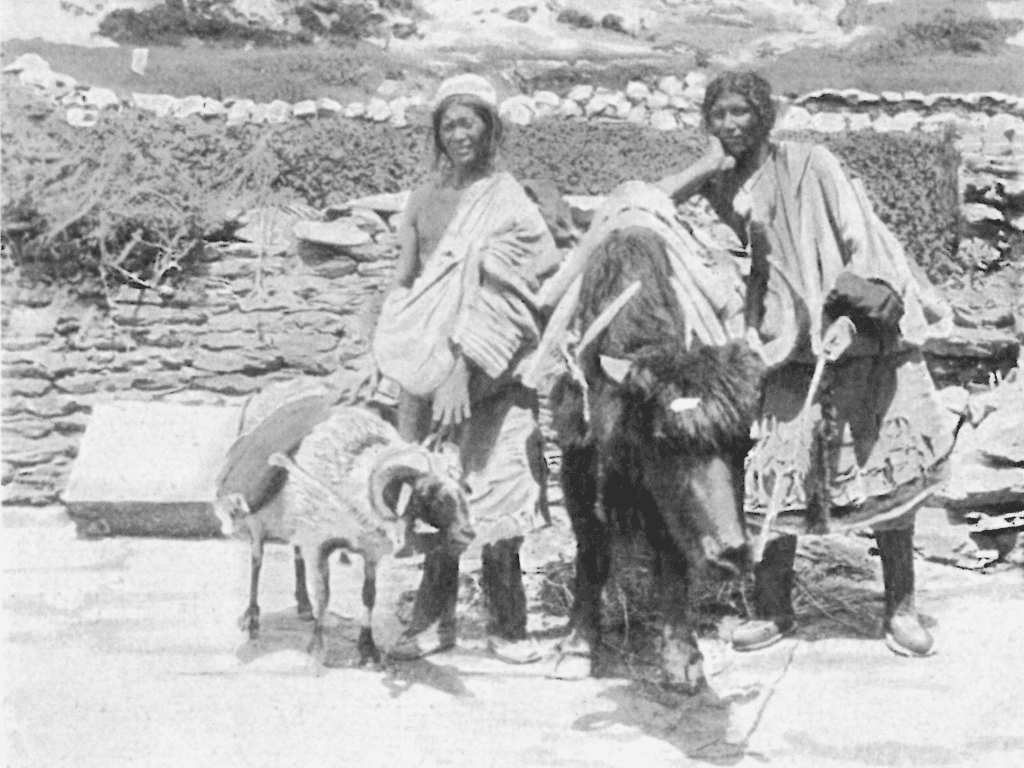
In the remote plains of Chushul in Changthang, Ladakh, stories of the past still live in the memories of its people. One such story comes from 84-year-old Konchok Tharchin, who, as a child, walked for days to Tibet to bring back salt.
This is not just a story about trade. It is about survival, resilience and a way of life that no longer exists.
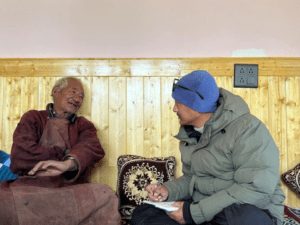 May-May Tharchin shares memories of the old salt journeys across Changthang
When Salt Was More Than Just Salt
Decades ago, salt was not easily available in Changthang. The region’s harsh climate made farming difficult, especially growing barley, which was a staple food. Because of this, people depended on trade. Salt from Tibet was highly valuable. It was used not only for food but also as a form of currency. Every summer, men from Chushul would prepare for a long journey to western Tibet to collect salt.
Konchok Tharchin made this journey when he was just eight years old.
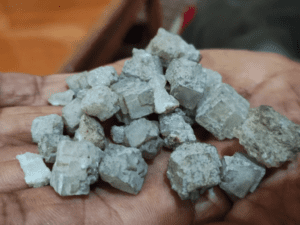 Salt brought from western Tibet, once essential for life in Changthang
A Journey Across Harsh Landscapes
The journey to Tibet took around eight to nine days on foot. There were no roads or vehicles, only rough terrain, strong winds and long walking hours. They travelled in groups, often with around 200 sheep. These sheep were essential, as they carried supplies on the way to Tibet and brought back salt on the return journey. The route passed through remote places like Katpa-Marpo, Gyaser-Getpu, Chulung and Rudog. In Rudog, they had to pay tax before they could collect salt.
From there, they continued towards Dakzong, their final destination. While travelling to Tibet, they walked during the day. On the way back, they preferred walking at night to protect the sheep from the harsh sun.
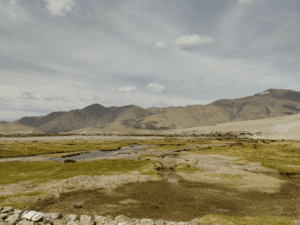 The journey begins from Chushul, crossing vast and harsh landscapes
Collecting Salt from Tibetan Lakes
In Dakzong, there were small salt lakes. The group would stay there for three to four days to collect salt. Before entering the water, they made protective covers for their feet using goat skin. Standing in the shallow lake, they gathered salt using simple tools and their hands. The salt was then piled up, dried under the sun, and broken into smaller pieces. It was packed into traditional sacks known as “Nual.” Each sheep carried about 10 to 15 kilograms of salt.
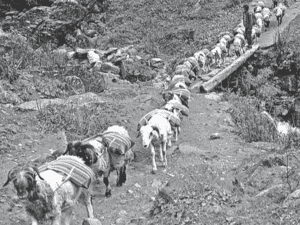 Sheep carrying salt packed in traditional sacks known as “Nual”
The Barter System
After returning to Chushul, the work was not over. The traders would then travel to places like Sakti and Shey to exchange salt for barley. This was part of a barter system, where goods were exchanged instead of money. Typically, four kilograms of salt would be exchanged for two kilograms of barley.
People from regions like Purig (Kargil) also took part in this trade. Salt became a link between different communities. Over time, as barley cultivation started in Changthang, the need for these long journeys reduced.
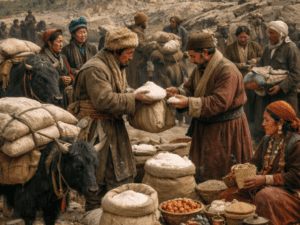 Salt traded for barley through a simple barter system in Sakti
A Way of Life That Disappeared
Today, the route to Dakzong lies across an international border and is no longer accessible. Salt is easily available in markets and roads have replaced long walking trails. What once took weeks can now be done in hours. But these changes also marked the end of a unique way of life.
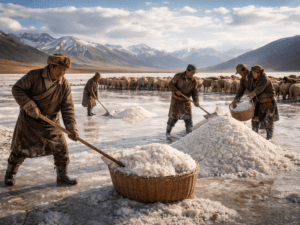 Salt collected by hand from the shallow lakes of Dakzong
More Than a Journey
For Konchok Tharchin, the journey to Tibet was not just about bringing salt. It was about responsibility at a young age, working together as a community and adapting to a difficult environment. In Changthang, survival depended on strength, cooperation and deep knowledge of the land. Today, while the old salt routes no longer exist, their stories remain.
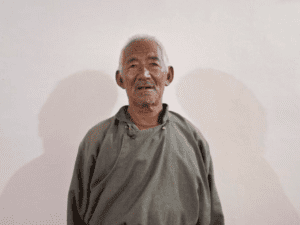 Konchok Tharchin, whose childhood was shaped by these journeys
The story of the salt trade in Changthang reminds us of a time when journeys were long, resources were scarce, and communities relied on each other to survive. Today, borders, roads and changing lifestyles have transformed life in Ladakh, but the spirit of those journeys still lives on in places like Chushul and in the memories of people like Konchok Tharchin.
If you wish to experience this landscape and its stories up close, consider staying at Rezang La Border Homestay in Chushul, where the mountains, the silence and the history still feel deeply connected to the past.